
The first time I tried to cook breakfast for the grandkids on a camp stove, I had five hungry kids circling me like a full-court press, a pancake stuck to the griddle, and a pot of water that had not even thought about boiling. The oldest was fifteen and the youngest was six, which meant the youngest was under my elbow and the oldest was filming it on his phone. I spent thirty years coaching high school football, so I know chaos when I see it, but that morning taught me something I did not expect: cooking for a crew at a campsite is not home cooking with a view. It is a different game entirely, and the stove matters less than the system around you.
These days, a long weekend at one of the beach parks on Oahu is our family ritual, and the Coleman Triton 2-Burner Propane Stove is the center of the camp kitchen. The silver Toyota Tundra gets loaded with tents, coolers, and enough pancake mix for a small army, and three to five grandkids pile in depending on who can come. I have run this play dozens of times now, and I have settled on a setup that works. What follows is the exact system I use, step by step, so you can feed your own crew without losing your mind or your patience.
The Stove That Feeds the Whole Crew
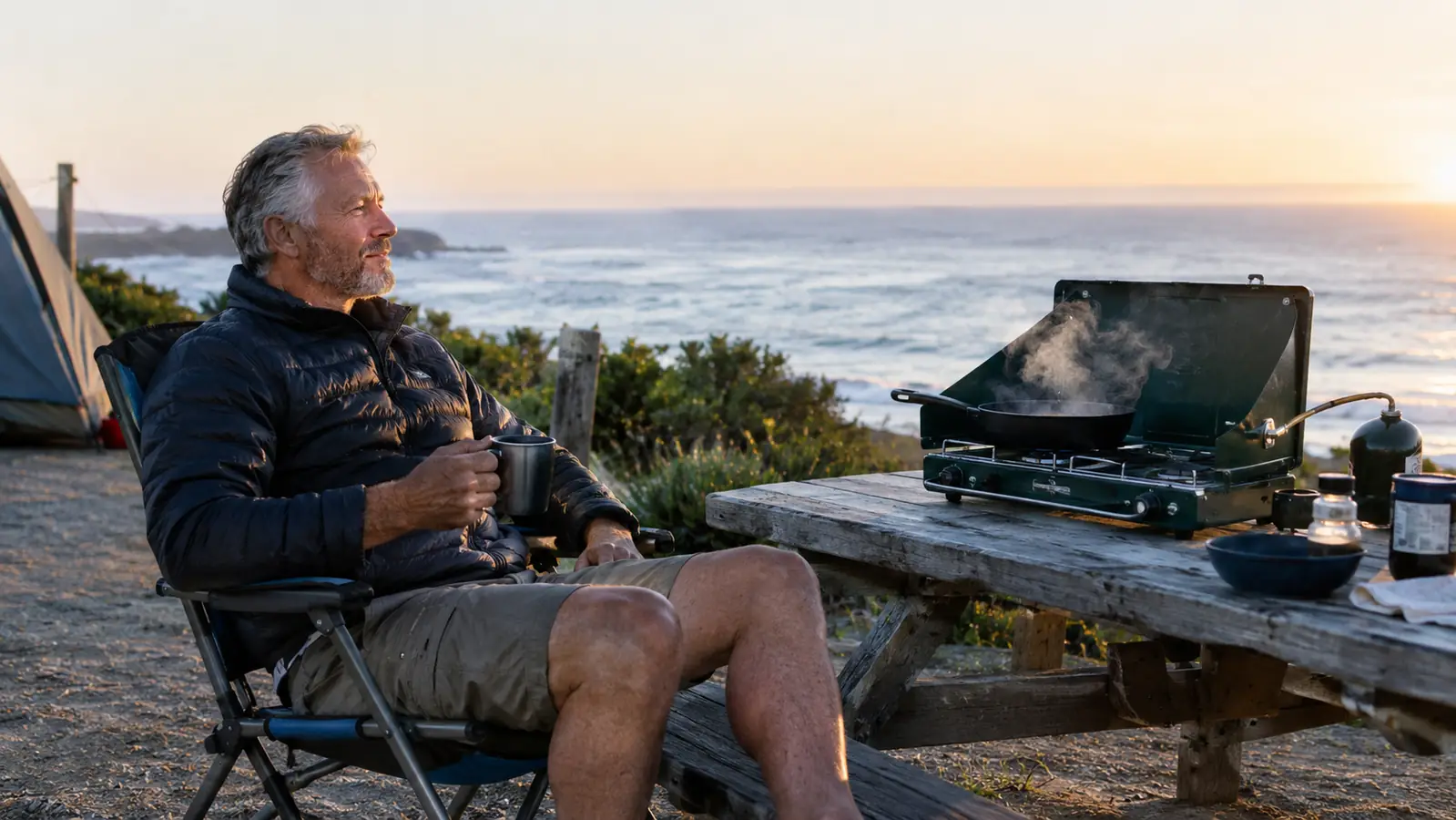
The Coleman Triton 2-Burner runs pancakes on one side and eggs on the other, folds flat for the truck bed, and has handled years of beach sand and long weekends without complaint. It is the stove I reach for every single trip.
Amazon Check Today's Price on Amazon →Step 1: Plan the Menu at Home, Not at the Campsite
The biggest mistake I made early on was treating camp cooking like home cooking. At home you can raid the fridge, run to the corner store, or swap a recipe when you realize you are missing an ingredient. At a beach park the nearest store can be twenty minutes away, and the little stores near the campgrounds know they have you cornered. You end up paying double for a tiny bottle of oil and losing an hour of beach time. Planning ahead is not just convenient, it is the whole ballgame.
So now the whole breakfast menu gets decided on the kitchen counter in Kapolei, before anything goes near the truck. I write it down, tape the list to a cooler lid, and stick to it. For a crew of five grandkids I keep it simple: one hot item, one easy side, and fruit. Pancakes and sausage. Scrambled eggs and toast. French toast when the kids vote for it. Simple menus cook faster, clean up faster, and leave more time for the beach, which is the only reason the kids came along in the first place.
Do the prep work at home too. Measure the pancake mix into a big zip bag and write the water amount right on the bag with a marker, so you do not have to do math at 7 a.m. Crack a dozen eggs into a jar to save space in the cooler. Chop the fruit the night before. The less you have to do at the table when five kids are hungry and staring at you, the smoother the morning goes. That prep is the difference between a relaxed breakfast and a scramble.
Step 2: Set Up on a Stable, Level Surface
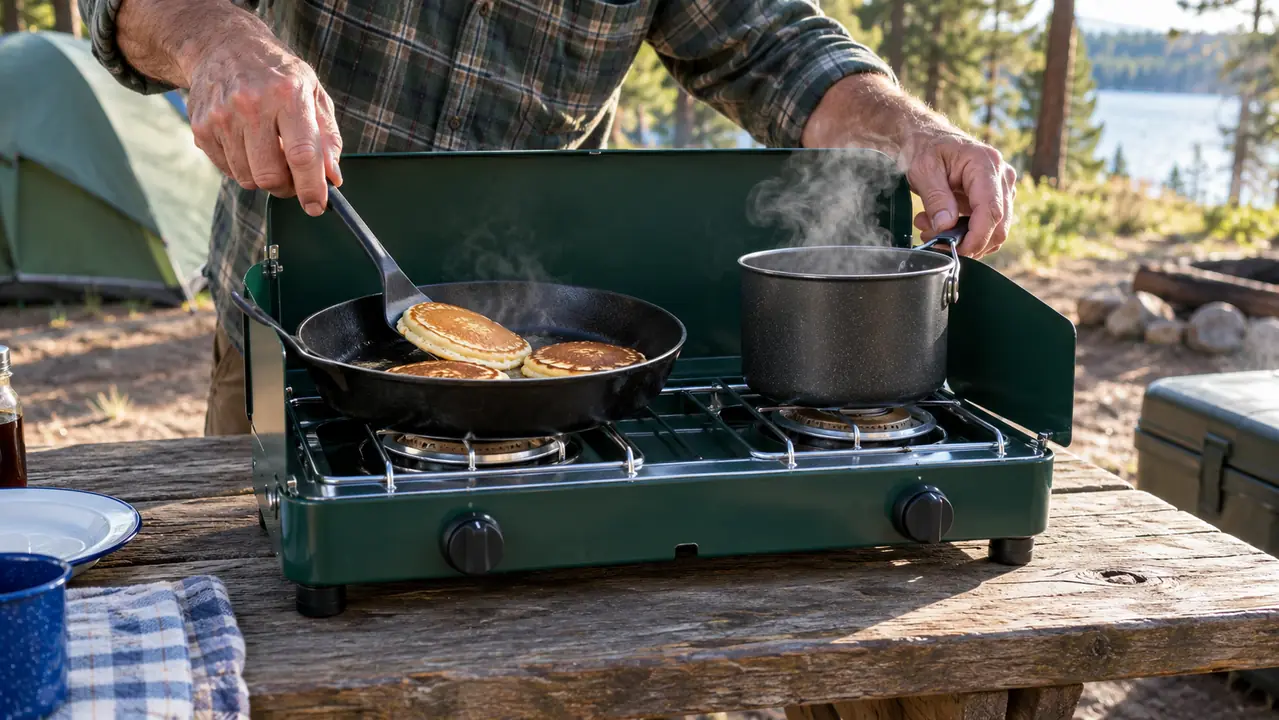
Camp stoves tip. I have watched it happen more than once, usually when somebody sets up on a picnic table that rocks or a patch of sand that shifts under a leg. A stove with a hot pan of grease on top does not forgive a wobble, and the cleanup is the kind of story you tell for years. Before the Triton goes anywhere near the table, I find the flattest spot I can and check it from two directions, like I am lining up a field goal.
The picnic tables at most state parks are solid, but the legs sink into soft ground and the tabletop can sit crooked. A folded towel or a spare cutting board under the low leg fixes most of it. If the ground is sand, the stove goes on the table, never on the sand itself. The Triton's legs are sturdy, but sand and propane burners do not mix, and nobody wants to spend Saturday morning cleaning beach grit out of a stove while the kids wait for breakfast.
Level is not just about safety, it is about the food. Pancakes cook uneven on a tilted griddle, and eggs run to one side of the pan. Two minutes spent leveling the stove saves you a batch of lopsided pancakes and a disappointed six-year-old. The kids do not care about the geometry, they care that the pancakes look like the ones at home. Give them that and the morning starts off right.
Step 3: Set Up a Camp Kitchen Before You Light a Burner
I run what I call the triangle. Stove, prep space, and serving space, arranged so I can reach all three without taking a step. At home the kitchen does this for you. At a campsite you have to build it yourself. I put the Triton on the picnic table, the cutting board to the left, and the plates and utensils to the right. Everything the kids need sits on the table, and everything hot stays near the stove. That simple layout keeps the morning from turning into a traffic jam.
Get the kids involved here. The six-year-old can hand out paper plates. The ten-year-old can carry the syrup. The teenager can watch the sausage and feel important about it. One small job for each kid keeps them out from under your feet and turns breakfast into part of the trip instead of a delay before the beach. It also means you are not the only one doing everything, which is the fastest way to burn out on camping with a big crew.
I also keep a full backup propane cylinder in the truck. Nothing stops a camp breakfast faster than a stove that runs dry halfway through the pancakes, and you cannot always count on the campground store being open. The Triton uses the standard propane cylinders, and after one bad morning I learned to carry two for a three-day weekend. One is not enough when you are cooking for a crew. That backup weighs almost nothing, and it has saved more than one trip.
Step 4: Cook in the Right Order and Use Both Burners
The Triton has two burners, and the whole trick is treating them like two players with two different jobs. The left burner gets the slow stuff, sausage or bacon that needs time. The right burner gets the fast stuff, eggs and pancakes that come out quick. When the meat is done, that side becomes the warm spot while the eggs finish. Two burners working together is what turns a chaotic morning into a rhythm, the same way two good guards run an offense.
Cook the food that keeps best first. Bacon and sausage can sit in a covered pan for a few minutes while the pancakes come off the griddle. Eggs do not wait for anybody. So the order is simple: start the meat, then the pancakes, then the eggs last. Done right, the last pancake and the first egg hit the plate at nearly the same time, and the kids eat together instead of in shifts. Eating together is the whole point of the trip.
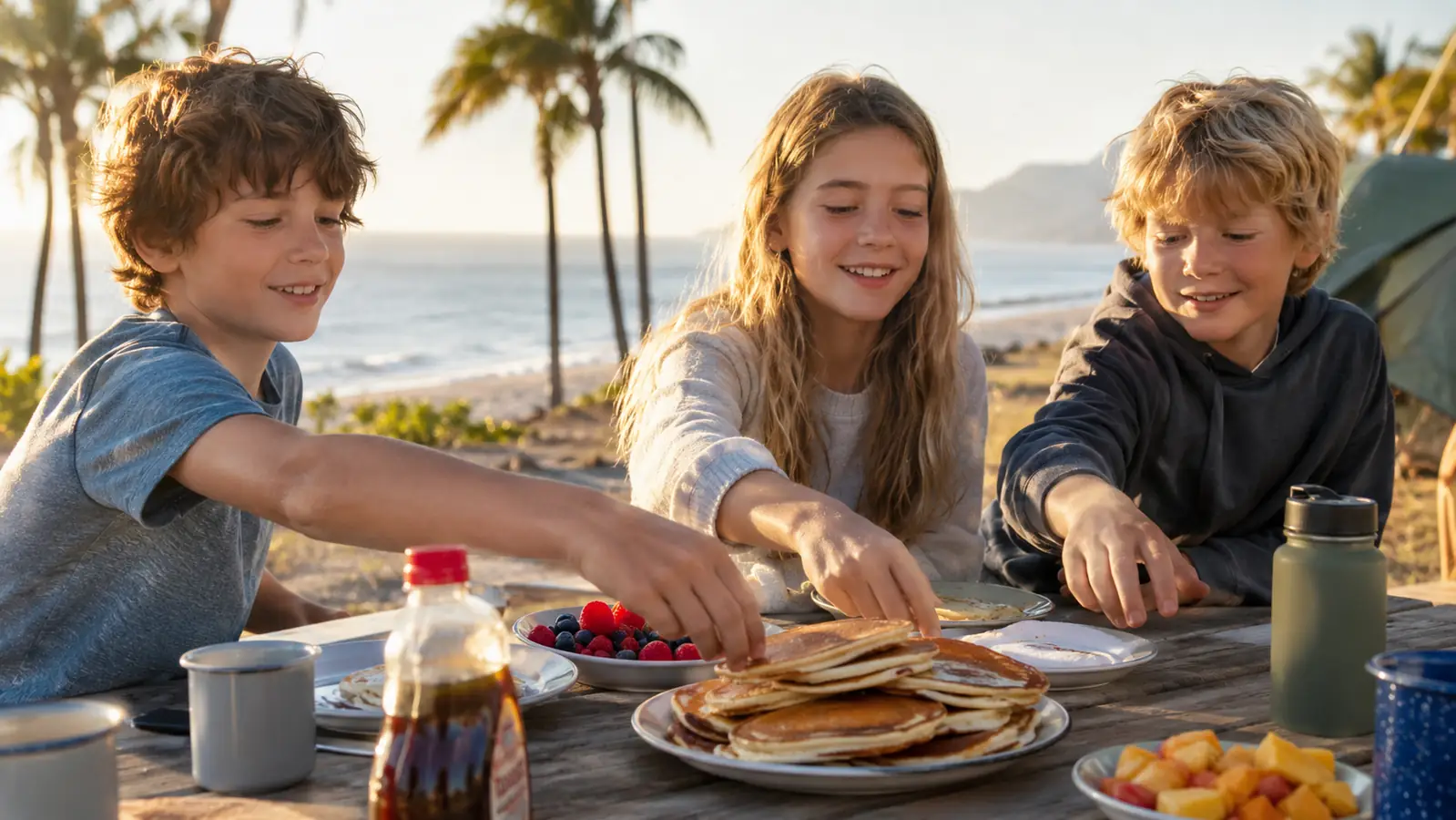
Batch cooking is the other half of this. I do not flip one pancake at a time like I am running a short-order kitchen for one customer. I pour three or four at once, flip them in a rhythm, and stack them on a plate under a clean towel. Five grandkids can put away a dozen pancakes between them, so you have to stay ahead of the crowd. Stay ahead of the crowd and you stay ahead of the whining, which is the real victory of any camp breakfast.
Step 5: Clean Up Fast and Pack It Away Dry
The fastest way to ruin a camp stove is to pack it away dirty. Grease collects in the burners, the smell gets baked in, and the next trip starts with a stove that smells like last month's sausage. I clean the Triton while breakfast is still being eaten. The griddle gets a quick scrape and wipe while it is still warm, and the drip tray gets emptied before it goes back in the truck. A warm stove cleans twice as fast as a cold one.
Salt water and beach air are the real enemies. Even on a dry weekend, the ocean breeze carries enough salt to start corrosion on bare metal. I wipe the stove down with a dry cloth before it goes into the Tundra, and I store it in the house between trips, not in the truck bed. Ten minutes of cleaning at the campsite saves an hour of scrubbing later, and it keeps the stove ready for the next weekend. A stove that lives in the truck bed does not last.
The last habit is the one the kids remember. We do a sweep of the table before we leave, checking for spatulas, propane cylinders, and the inevitable lost fork. My rule is that nobody leaves the campsite until the table is clear and the stove is in the truck. It keeps the gear together, and it teaches the kids that a campground is a place you leave better than you found it. That lesson is worth more than any breakfast I have ever cooked.
What Else Helps
A good stove is the center of the camp kitchen, but it is not the whole system. A cast iron skillet holds heat better than a thin pan and makes better pancakes. A percolator handles the coffee on a third surface while the stove does the cooking. A big cutting board doubles as prep space and a serving tray. And a plastic tub with handles keeps all the small stuff, oil, spatula, tongs, matches, in one place so nothing gets left behind at the campsite.
The Coleman Triton does the heavy lifting, but the system around it is what makes breakfast feel easy. On our best mornings, the coffee is done before the kids are even awake, and by the time they wander over, the table is set and the first batch is ready. That is the goal. Not a fancy meal, just a warm one, with everybody fed and the whole day still ahead of us.
One more thing, because it matters more than any gadget: a clear rule about the hot zone. My grandkids know they do not go near the stove while it is lit, no exceptions. I keep a small bucket of water next to the table, not just for cooking but for any flare-up, and I have taught the older kids how to turn the burners off. Safety is not a lecture, it is a habit, and at a campsite full of kids it is the most important habit there is.
Three or four pancakes at a time, sausage on the left burner, eggs last. That rhythm feeds five grandkids and still gets everybody to the beach by mid-morning.
Feed the Crew, Not the Chaos
The Coleman Triton 2-Burner Propane Stove has handled every long weekend breakfast for my crew, and it will handle yours. Check the current price on Amazon and see if it fits your camp kitchen.
Amazon Check Today's Price on Amazon →