
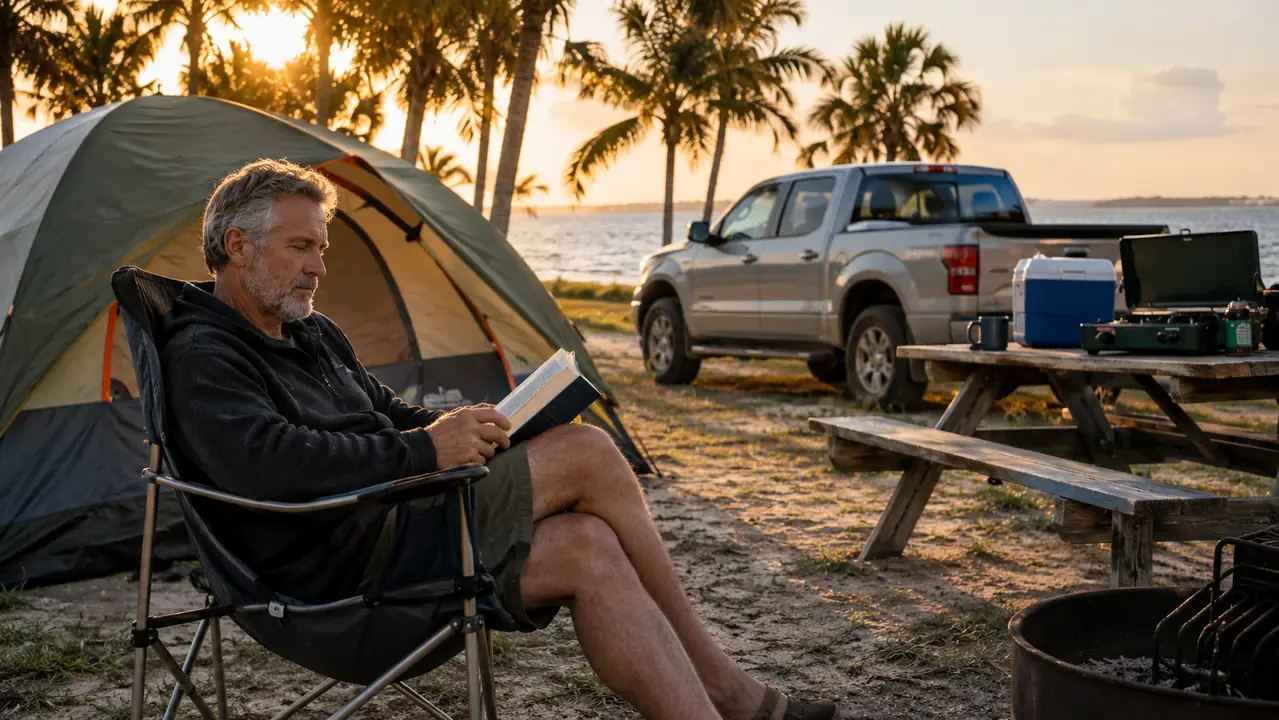
Every long weekend, I watch the same scene play out at the campground. A family pulls up around four in the afternoon, pops the trunk, and starts wrestling with a tangle of poles while the kids lose patience in the back seat. I've been that guy. For years I camped with tents that took forever to raise, dripped on my face in the first drizzle, or turned into a sauna by seven in the morning. I'd spend the first night fighting with the zipper and the second night sleeping badly, and by Sunday I'd swear I was done camping.
Then a few years ago I parked my silver Tundra at a state campground, pulled out a Coleman Sundome for the first time, and had it standing before the grandkids finished arguing over who carried the cooler. That tent changed how I pack for a long weekend. I've now used it on more than a dozen trips, mostly here on Oahu, and this is the honest long-term report: what holds up, what doesn't, and whether it deserves a spot in your truck.
The Quick Verdict
The Coleman Sundome is the tent I hand to any family that wants a simple, dependable shelter for car camping. It sets up in about ten minutes, keeps you dry in ordinary rain, and takes whatever kids throw at it. It is not an expedition tent, and it never claims to be. For the way most of us actually camp, it's the right tool, and it earns its place trip after trip.
Amazon Check Today's Price →The tent that has survived a dozen long weekends with my grandkids
If you want a shelter that goes up fast, sleeps a crew, and doesn't cost a fortune, the Sundome is the one I keep in the back of my truck. See today's price on Amazon and read what recent buyers are saying before you decide.
Amazon Check Today's Price on Amazon →How I've Used It
I'm Sam Faleolo, 63 years old, retired high school football coach, and I live in Kapolei on the west side of Oahu. I've camped on long weekends for as long as my kids can remember, and now I take the grandkids along, usually three to five of them, ages six to fifteen. The Sundome in the six-person size has been our main shelter for two years, and it has been on at least a dozen trips: beach parks, state campgrounds, and one rainy week on the mainland.
Our pattern is simple. Friday after school, I load the Tundra, tent goes in first with the poles and stakes in the bag, rainfly folded on top. We drive, we set up before dark, we cook, we tell stories, and Sunday we pack out. The Sundome has done that rhythm over and over, and it's the tent I grab without thinking. That's the highest compliment I can give any gear. Good gear is gear you stop noticing, and after the first few trips, I stopped thinking about the tent entirely.
I've also lent the Sundome to my daughter's family for a scout weekend, and it came back with no complaints and no missing parts. That's another kind of test. A tent that survives being borrowed is a tent that's built right.
Setup: Ten Minutes, Even With an Audience
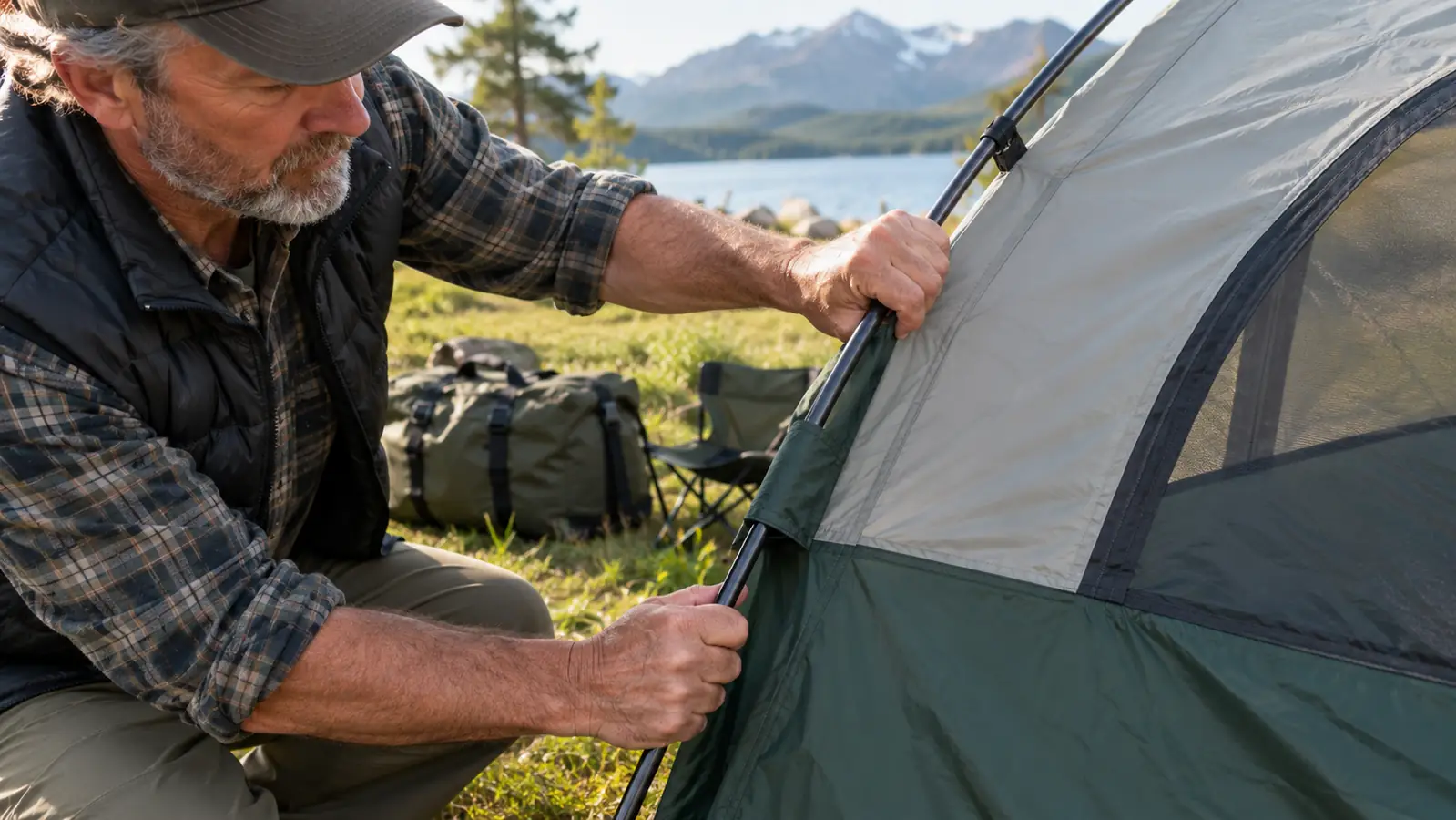
The 'sets up in 10 minutes' line is not marketing talk. The Sundome uses continuous pole sleeves, which sounds technical until you've done it once. One pole runs through the whole sleeve, you bend it over the top, and the second pole crosses it. The clips snap onto the frame, and the body hangs from there. The whole thing is forgiving, which matters when you're doing it with three kids 'helping.'
I timed myself this spring at a beach park on the windward side. My oldest grandson held a stopwatch, mostly to make sure I wasn't cheating. Nine minutes and change from the bag to fully staked, and that includes me taking my time with my knees. The trick is to stake the corners first, then raise the poles, so the tent doesn't skid across the grass while you're working. Take down is just as fast, maybe faster, because the sleeves stay with the body and everything folds into one bundle.
One honest note: the stakes that come with it are nothing special. I replaced mine with heavier ones after the first trip, and I'd tell anyone to do the same before they rely on it in wind. That's a cheap fix and it turns a good tent into a reliable one.
Weather: What It Handles and What It Doesn't
Coleman builds the Sundome with what they call the WeatherTec system, and in practice it means a welded floor, inverted seams, and a rainfly that covers the top. I've been through two nights of steady rain and stayed completely dry. On the same trip, a friend's cheaper tent leaked through the floor and he spent the morning drying sleeping bags on a picnic table. That was the moment I stopped second-guessing the Sundome.
Wind is the honest weak spot, and I won't sugarcoat it. A dome is a dome, and a strong gust at a beach park will push the walls in. It won't fly away, but it will move. I've learned to point the narrow end into the wind, tension the rainfly properly, and add extra stakes. When the forecast calls for serious wind, I camp somewhere sheltered or stay home. This is a fair-weather family tent, and it's excellent at that job.
The rainfly will flap in a breeze unless you tension it right, and the windows need to be on the lee side. It's a ten-minute habit once you learn it. What it won't do is handle a tropical storm or a mountain night. Know that going in, and you'll never be disappointed. I'd rather have a tent that's honest about its limits than one that promises everything and delivers a puddle.
Condensation is worth a mention because every tent does it, and the Sundome is no exception. On cool nights with four kids breathing inside, the walls will collect moisture by morning. The cure is simple: leave a window cracked and don't press the sleeping bags against the walls. Once I learned that, we stopped waking up damp.
Space and Comfort for a Crew of Kids
The six-person Sundome fits our crew, and I say 'fits' on purpose. Four grandkids in sleeping bags plus my wife and me leaves room for a duffel and a lantern. In practice we run it as two rooms, kids on one side, adults on the other, with bags stacked as a divider. Nobody rolls over onto anybody, and that counts as a win in my book.
Headroom is the feature I care about most at my age. The center height is enough for me to sit up straight and change standing in the middle, and I don't have to crawl on my knees to get to my pillow. For older knees, that's not a luxury, it's the difference between camping and a week of sore joints.
The floor layout is one big open rectangle, which sounds boring and is exactly right. Kids spread out, bags go where they fit, and nobody is stuck in a corner. I've slept in tents with awkward shaped floors and odd partitions, and the Sundome's plain rectangle is the one that actually works with three restless sleepers.
The windows are placed high enough that the kids can look out without unzipping, and the mesh keeps the bugs out while the rainfly is off. On warm evenings we run with just the mesh and let the trade winds do the work. It's the difference between sitting in a stuffy tent and actually enjoying the evening.
The Long Haul: What Holds Up and What Doesn't
After two years and a dozen trips, the honest answer is that the Sundome has held up better than tents that cost far more. The zippers are the first thing to fail on cheap tents, and mine still run smooth. The poles haven't cracked. The floor is intact, and that floor has seen sand, gravel, wet swimsuits, and at least one dropped water bottle.
What has worn: the carry bag is a tight fit, and the bag zipper is the weakest link in the whole package. The stake loops are fine, but I've reinforced the corner webbing where the kids grab it to drag the tent into position. The rainfly fabric has faded a little in the Hawaii sun, which doesn't hurt function at all.
Coleman made a tent that treats the body as the thing that matters and the bag as an afterthought. If you treat the Sundome like a family car-camping tent, it will last you years. If you treat it like expedition gear, you'll be disappointed. It doesn't pretend to be something it isn't, and that honesty is why I keep recommending it.
The Small Stuff That Matters
The details are where you see the difference between a tent designed by people who camp and one designed by a committee. The hinged door swings open instead of flopping to the ground, which sounds like a small thing until you're carrying a sleeping six-year-old in at night. The E-port lets me run an extension cord in for a fan on hot nights. Mesh pockets along the walls hold phones, glasses, and the card game.
The Sundome also packs smaller than you'd expect. It rolls into a bundle about the size of a duffel bag, and it's happy living flat under the truck's back seat between trips. It doesn't need to be rolled perfectly to fit, which I appreciate because I am not a man who rolls tents perfectly.
When the tent is wet, I hang it over the picnic table bench or the truck tailgate for an hour before packing. If you pack any tent damp, it will mildew, and the Sundome is no exception. It does have a big enough door and a simple enough shape that drying it is quick work.
The things I'd change are small and mostly about the extras. The carry bag could use a wider opening and a sturdier zipper. The stakes should be heavier out of the box. And I wish the rainfly had one more attachment point on each side, because tensioning it flat takes a little fussing. None of those are deal breakers. They're the kind of nits you pick on a tent that's otherwise done its job well.
What I Liked
- Genuinely sets up in about ten minutes, even solo
- Welded floor and covered seams kept us dry in steady rain
- Center headroom lets me stand up to change clothes
- Hinged door and E-port make everyday camping easier
- Survived two years of kid-heavy weekend use
- Plain rectangular floor that actually sleeps a crew
Where It Falls Short
- Included stakes are weak; plan to replace them
- Rainfly flaps in wind until you tension it right
- Carry bag is a tight fit and its zipper wears first
- Not built for high wind, snow, or winter camping
- Six-person rating means four adults, not six with gear
- Rainfly needs a little fussing to sit flat
Nine minutes and change from the bag to fully staked, and that includes me taking my time with my knees.
Who This Is For
The Sundome is for families who camp from the back of a car or truck, the way most of us actually camp. It's for the first-time buyer who wants a tent that's forgiving to set up and won't leak on the second trip. It's for grandparents like me who need headroom and an easy door, and for scout troops, festival-goers, and backyard sleepovers where the tent will get used hard and put away wet.
If you camp a few weekends a year and you want a tent that never becomes the story of the trip, the Sundome is that tent. It's the gear equivalent of a reliable middle linebacker: not flashy, not loud, just always where it needs to be, doing its job so the rest of the team can do theirs.
Who Should Skip It
Skip the Sundome if you're backpacking; it's heavy and bulky, and you'll hate carrying it. Skip it if you camp in serious wind or snow, because a dome tent has limits and this one knows them. Skip it if you need to sleep six full-size adults with all their gear, because that's not what six-person means in the real world. And skip it if you want a cabin-style tent with standing room everywhere.
None of that is a knock on the tent. It's a reminder to buy the tool that fits the job. The Sundome's job is weekend car camping in fair weather with a crew of kids, and for that job, I haven't found anything that works better for the money.
Two years in, I'd buy the Sundome again
It's not the fanciest tent on the market. It's the one that works, trip after trip, and that's worth more than a long list of features. Check today's price on Amazon and see what recent buyers are saying about theirs.
Amazon Check Today's Price on Amazon →