
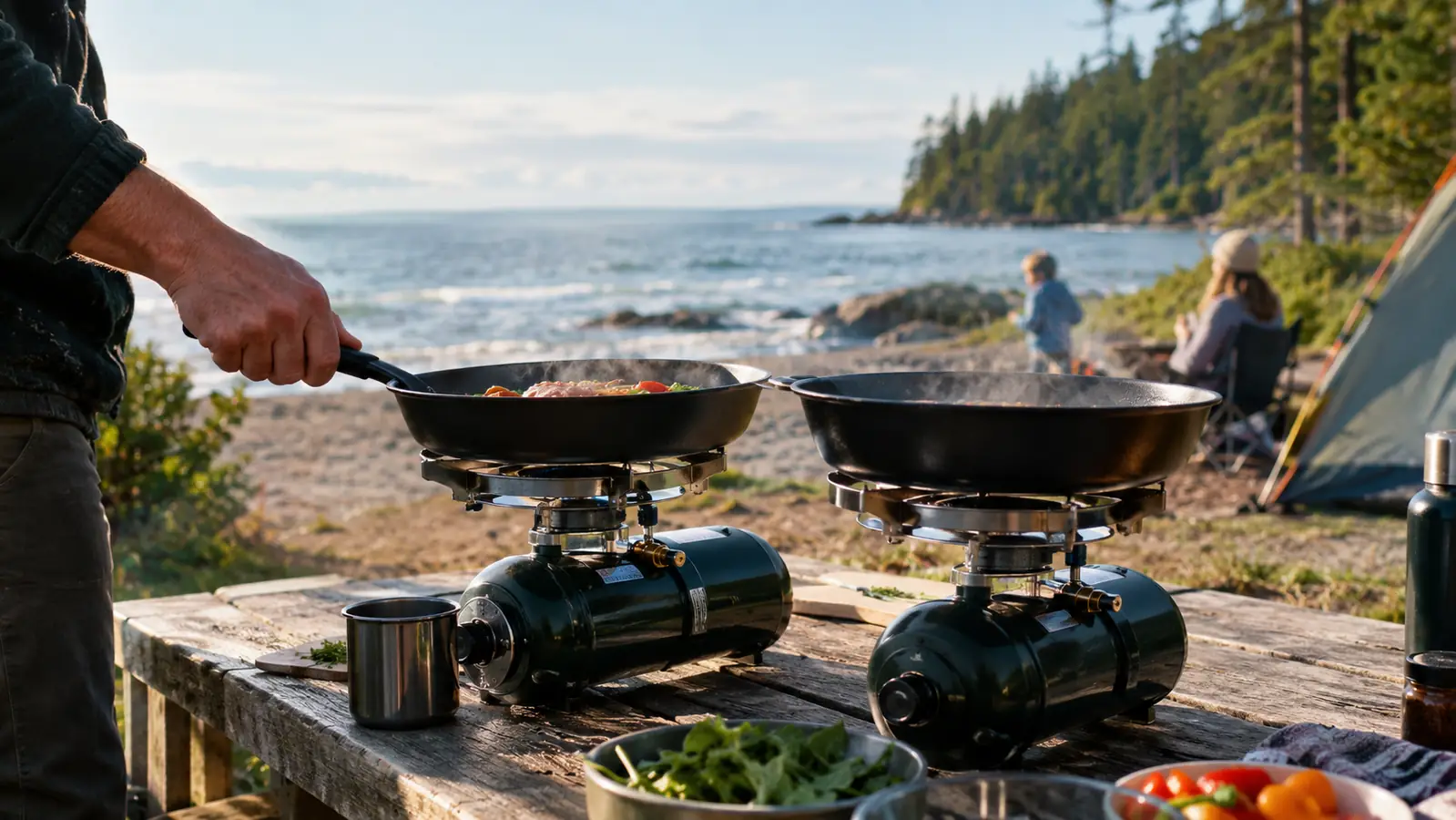
Saturday morning at Kualoa Regional Park, the wind off the water flips a camp stove flame sideways, and I have eleven pancakes waiting on the griddle and a crew of grandkids who do not believe in patience. I have cooked breakfast for this crowd on a lot of stoves over the years. The Coleman Triton 2-Burner Propane Stove is the one I keep grabbing, but it was not the only stove on my picnic table this spring. I ran it head to head against the Camp Chef Everest 2X for three long weekends, because I wanted to know which one actually earns its spot in the back of a silver Tundra. Here is the short answer before the details, and it might surprise you.
If you mostly cook for a family crew, keep things simple, and want a stove that lights on the first try and does not argue with you, the Triton is the better buy. If you boil big pots of water all day, run a serious base camp kitchen, and do not mind the extra weight, the Everest cooks harder. I would call the Triton the smarter choice for nine out of ten car campers, and I will show you exactly why, including the places where the Everest plainly beats it.
Here is the quick version of how they stack up, in the order I actually think about it: heat, weight, wind, cooking room, and cleanup. These are the things that decide which stove comes with us on a three-day weekend.
| Coleman Triton 2-Burner | Camp Chef Everest 2X | |
|---|---|---|
| Heat output | 20,000 total BTUs, two burners that hold a steady flame | 30,000 total BTUs, noticeably more fire on tap |
| Boil speed | Brings a four-quart pot to a boil in about 8 minutes on a calm day | Brings the same pot to a boil in about 5 minutes |
| Price | Friendlier price point, easy to justify for a first stove | Premium price point, you pay for the extra heat and surface |
| Weight | Around 10 pounds, easy for older shoulders to lift | Heavier at around 14 pounds, but it has a solid carry handle |
| Wind behavior | Shielded burner cups hold the flame in a steady beach breeze | Three-sided windscreen helps, but it wants a sheltered spot |
| Cooking surface | Fits a 12-inch skillet and a 10-inch pot with some juggling | Wider surface, fits a 12-inch skillet and a griddle side by side |
| Cleanup | Removable grates and a drip tray, wiped down in minutes | Same idea, but more corners to scrub around the burners |
| Best for | Family car camping, breakfast for a crowd, no fuss | Base camp cooking with big pots and boil-fast meals |
Where the Coleman Triton Wins
The Triton's biggest advantage for me is how it behaves when the trade winds show up. At Kualoa, the wind comes off the water all morning, and a stove that cannot handle a breeze turns breakfast into a comedy of relighting. Coleman's PerfectHeat burner cups shield the flame at the base, so I can run both burners in an open picnic shelter and the pancakes still cook evenly. The Everest has a three-sided windscreen that helps, but I found myself hunting for a sheltered corner with it, while the Triton just sat there and worked. On the windy Saturday of my test, the Triton cooked a full batch of pancakes and a dozen eggs without a single relight. The Everest needed two relights and a repositioning before I got the flame steady.
The other win is the one my back notices. At 63, I am not the guy who heaves a heavy stove onto the tailgate without thinking about it. The Triton is the lighter stove by a good margin, and it is shaped so you can grab it with one hand and set it on the picnic table. Cleanup matters just as much, because the last thing I want after feeding five grandkids is a half-hour scrub job. The grates and drip tray come out and go straight into the dish bin, and the stove top wipes down in a couple of minutes. I timed it one Sunday: eight minutes from last pancake off the griddle to stove back in the tub in the Tundra. That is the kind of number that matters at my age.
One more thing in the Triton's column: it starts. The knob ignition has clicked on the first try every single time I have used it, including a damp morning after the stove had sat in the truck bed for a month. The guy at the next campsite over spent ten minutes with a lighter and a lot of colorful language before his stove settled down. I am not saying the Everest has that problem, because it does not. I am saying the Triton has never once made me work for breakfast, and at 6 a.m. with five hungry kids, that is worth a lot.
Where the Camp Chef Everest 2X Wins
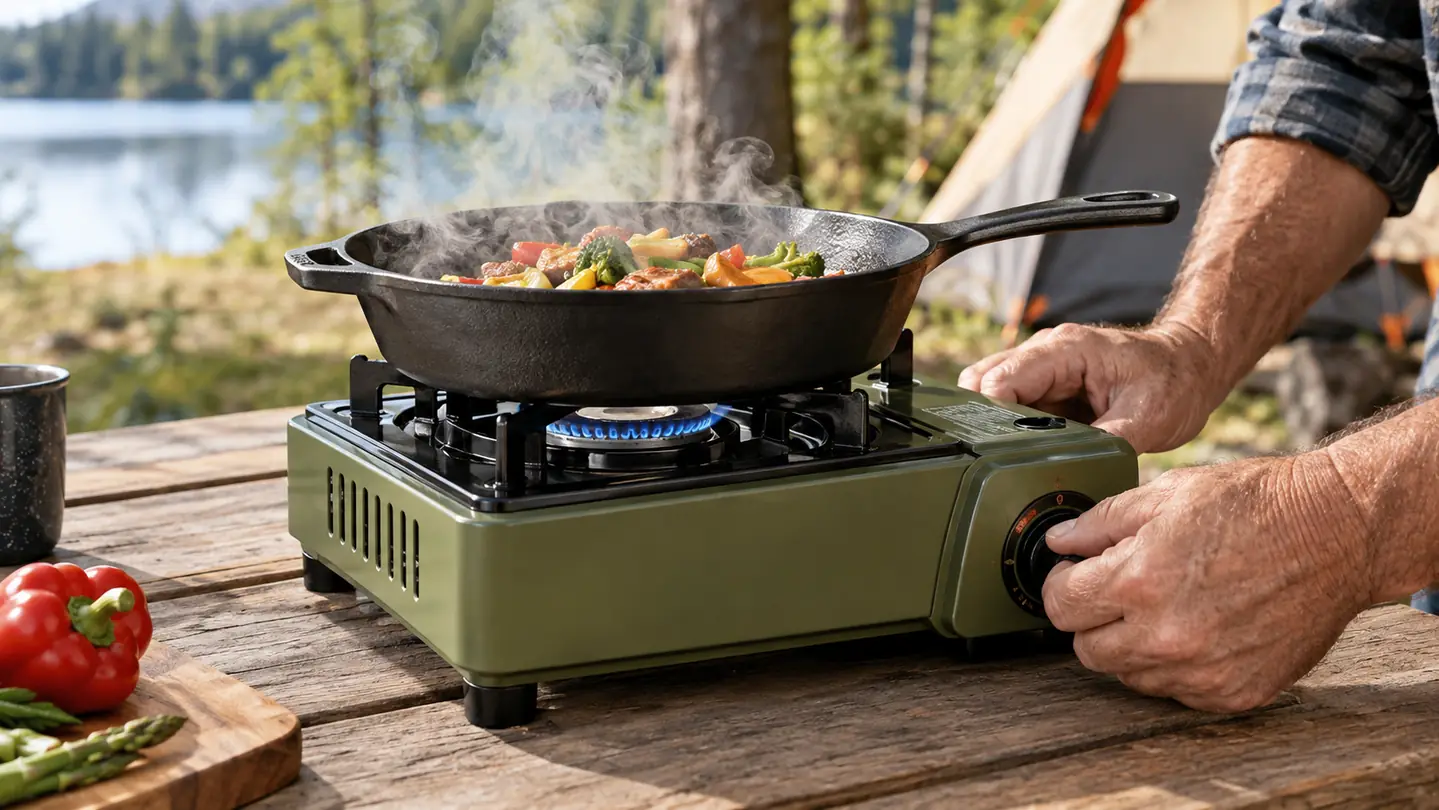
I will give the Everest this much: it cooks harder, and that is not a small thing. On the Saturday I brought it to the beach park, I filled a four-quart pot for hot chocolate and it was rolling before I finished setting out the cups. The Triton is no slouch, but thirty thousand BTUs is thirty thousand BTUs. By the clock on a calm morning, the Everest brought that same four-quart pot to a full rolling boil in right around five minutes. The Triton needed about eight. When you need a big pot of water for pasta, or corn on the cob for a dozen people, that gap means the Everest gets dinner on the table sooner. That extra fire is a real difference, not a spec-sheet talking point. If your camping routine includes one big-pot meal every night, this is the stove that shortens the wait.
The Everest also gives you more room to work. The cooking surface is wider, so I could run a twelve-inch skillet and a griddle at the same time without playing a game of elbow tag with the pot handles. Camp Chef sells a matching griddle that sits right on the burners, and the whole setup feels built for somebody who treats the campsite like a real kitchen. That is a genuine advantage for bigger groups, or for anyone who cooks more than breakfast. On my test weekend, I cooked a full dinner for eight on the Everest without ever feeling crowded: teriyaki chicken, rice, and a pot of vegetables all going at once. The Triton can do that too, but you have to work the sequence, one pan finishing before the next starts.
The Everest also folds up into a flatter package, which is its own kind of carry. The legs fold under and the whole stove closes into a box shape with a solid handle. If you have the arm strength, it actually carries well for a heavy stove. The tradeoff is that the extra metal has to go somewhere, and on the Tundra tailgate it takes up more room than the Triton. Worth knowing before you buy.
My Pick for Most Family Car Campers
The Coleman Triton is lighter, steadier in the wind, and easier to clean. It will not boil a pot as fast as the Everest, but it does the job without drama. For three-day weekends with a crew of grandkids, that is the stove I reach for.
Amazon Check Today's Price on Amazon →How I Tested Both Stoves
I tested both stoves over three long weekends this spring, using the same two one-pound propane bottles, the same pots, and the same breakfast menu: eggs, bacon or Portuguese sausage, and pancakes, plus one big-pot dinner each trip. The first weekend I ran the Triton at Kualoa Regional Park. The second weekend I ran the Everest at the same park. The third weekend I set them up side by side on two picnic tables to settle the close calls. I timed boils, counted relights, and kept a rough tally of how long cleanup took after feeding five grandkids, ages six to fifteen, who do not slow down for anyone.
The boil test is where the Everest pulled ahead, no argument. On a calm morning it brought a four-quart pot to a rolling boil about three minutes faster than the Triton. On the windy Saturday, that gap nearly disappeared, because the Triton's shielded burners held their heat while I spent ten minutes repositioning the Everest out of the gusts. The wind test is also where the Triton surprised me. At Kualoa, with a steady breeze off the water, both burners stayed lit through a full batch of pancakes, and the flame never once looked like it wanted to give up.
What surprised me most was how much the weight difference mattered at the end of the day. The Everest is the kind of stove you carry with two hands and set down carefully. The Triton I can lift with one hand and hand to one of the older grandkids to put on the table. For a guy whose knees complain after a day of hauling camp chairs and coolers, that matters more on Sunday night than it does on the spec sheet. I am 63, I coach youth basketball on Saturdays, and I have learned to pick my battles. Lifting a fourteen-pound stove off the tailgate at the end of a long weekend is a battle I would rather not fight. One of the grandkids, the nine-year-old, noticed the difference first. She asked why the big stove was so heavy, and that is when I started timing the carries.
Both stoves ran on the same one-pound propane bottles for the whole test, and both accept an adapter hose for a twenty-pound tank, which is what I use at home between trips. On one-pound bottles, the Everest burns through fuel faster because it is pushing more heat. That is physics, not a flaw, but it is worth knowing.
Who Should Buy Which
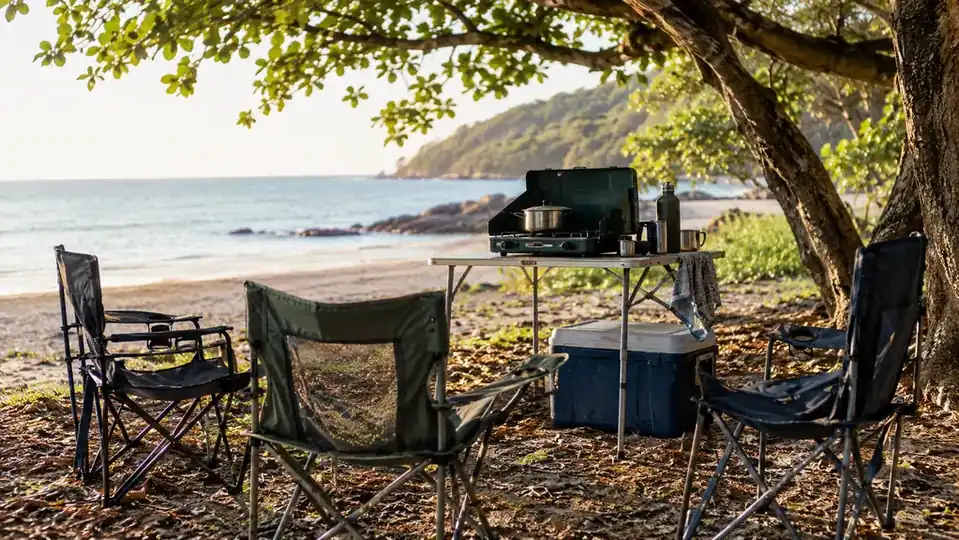
Buy the Coleman Triton if your camping looks like mine: you drive to a beach park, set up under a shade tree, and cook breakfast and dinner for a rotating crew of kids. It lights on the first try, shrugs off wind, packs light, and cleans up fast. Buy the Camp Chef Everest 2X if you are the camp cook for a big group that wants a hot meal morning and night, if you boil water constantly, or if you already own Camp Chef accessories and want the griddle to match. Neither stove is the wrong stove. They are aimed at different trips. The Triton is the one I would buy again, and the one I would tell my daughter to buy for her first stove, because it does ninety percent of the job with none of the fuss.
And if you are still torn, think about what happens at the end of the trip. The stove that is easy to load back into the Tundra is the stove that actually comes on the next trip. For me, that has always been the Triton. The Everest stayed home on the fourth weekend, and I did not miss it.
If you are buying a first stove, or a gift for a young adult who camps on the weekends, the Triton is the safer choice. It is forgiving, it is light, and it is hard to mess up. The Everest is the stove you buy when you already know you will use the extra heat, because you have been cooking for crowds long enough to miss it.
The Bottom Line
The bottom line is straightforward. The Camp Chef Everest 2X cooks harder and gives you more room to work, and if I were running a base camp kitchen for two weeks, I would want it. But for three-day weekends at the beach with a crew of grandkids, the Coleman Triton is the stove I reach for. It is lighter on my back, steadier in the wind, quicker to clean, and honest about what it does well. That is the whole review in one paragraph.
Ready for Easier Campfire Cooking?
If your last trip was more drama than dinner, the Coleman Triton is the upgrade that makes breakfast simple again. Check the current price, see the reviews, and decide for yourself.
Amazon Check Today's Price on Amazon →