
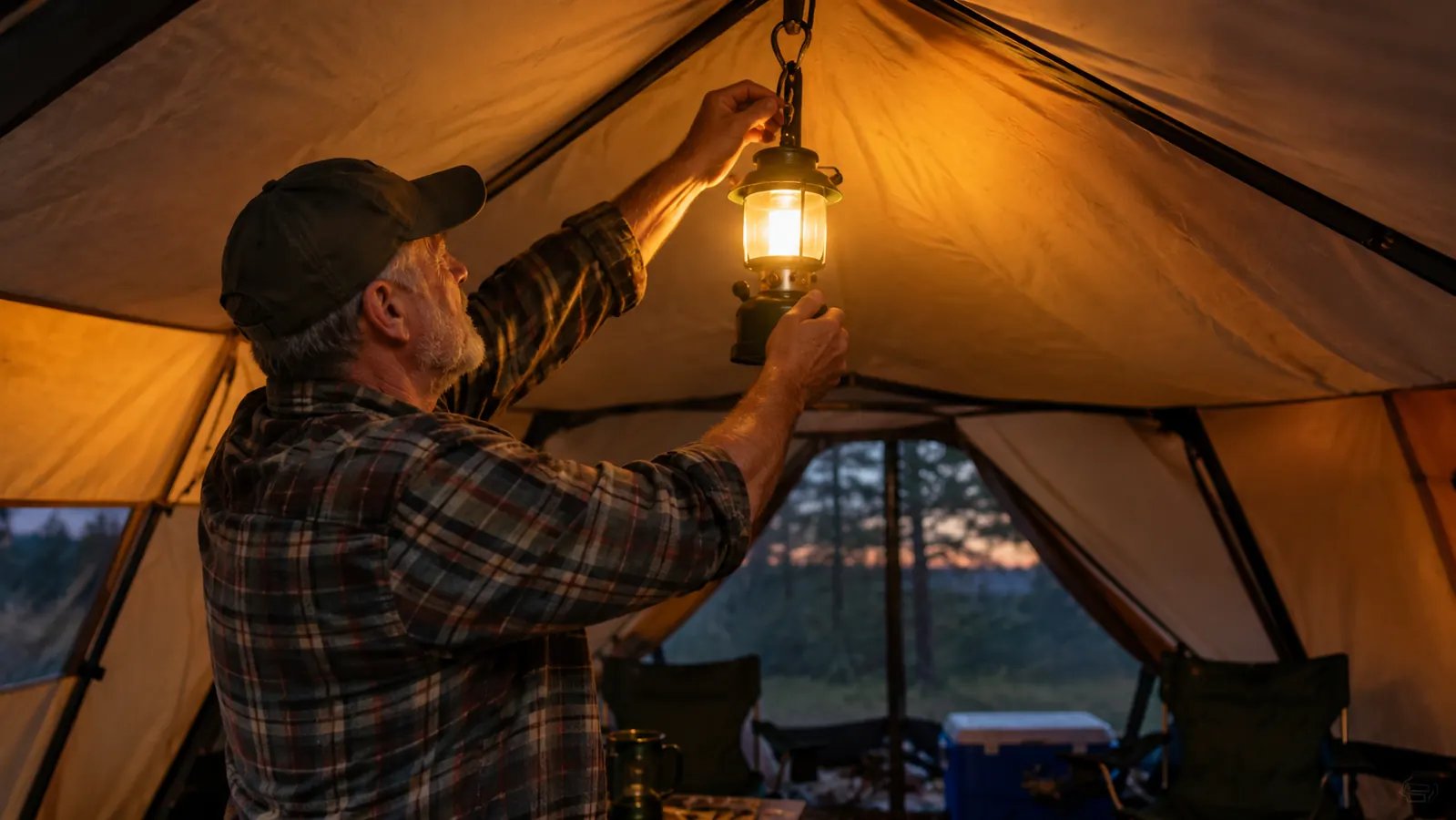
I'll be straight with you. I bought the Lepro 1000LM LED Camping Lantern back in March, right before our first long weekend of the season, and I've used it on every trip since. That's nine trips, about twenty-two nights total, from a windy beach park on the north shore to a rainy county campground upcountry. I'm Sam, retired football coach, and when I haul three to five grandkids somewhere for the weekend, the gear has to work the first time, every time. This lantern mostly does. But there are a few things I wish somebody had told me before I handed over my card, and this review is about those things as much as the things I love.
The Quick Verdict
The Lepro 1000LM is the lantern I grab first for family car camping. Bright enough to cook by, tough enough to survive a truck bed full of grandkids, and the battery honestly lasts the weekend. It's not perfect: the hook is fiddly, the lowest mode is still bright for a tent, and the dial takes a firm hand. But for the money, I haven't found anything that does the job better.
Amazon Check Today's Price →The lantern I've hung at every campsite for six months
If you want the same light I've used on twenty-two nights of family camping, check the current price on Amazon. It's the one I reach for first, and the one I'd buy again tomorrow.
Amazon Check Today's Price on Amazon →How I've Used It
I don't review gear from a backyard. I use it the way my family actually camps. That means the Lepro has been dropped on gravel, kicked across a picnic table by a six-year-old, left out in a light rain, and hung from a tent hook that was never designed for a lantern this size. It's been the main light for dinner at a beach park where the wind nearly took the table, the nightlight for a tent full of kids who don't like the dark, and the emergency light when the camp stove flame went out and I needed to see what I was doing.
My setup is simple. I drive a silver Toyota Tundra, and the lantern rides in a plastic bin with the rest of the camp kitchen. On arrival, it goes on the picnic table first, before the tent, because the kids need light to help unload and I need to see the tent stakes. That first hour of setup is where a lantern earns its keep, and the Lepro has never once let me down there.
The battery is the headline. Lepro says 4400mAh, and in my use that means a full weekend. I charge it at home on Friday morning, use it Friday night for about four hours, Saturday for six or seven hours spread across the day, and Sunday morning for the last pack-up. It's still glowing when I put it back in the bin. I've never seen the red low-battery light come on during a trip, not once in nine trips.
To give you a real number, here is one weekend. We got to the campground on a Friday with the Lepro lantern fully charged from the house. It ran on medium from about seven to ten each night, plus a few late trips to the restroom on low with the grandkids. By Sunday night the indicator was still showing charge, and I never plugged it in at the site. That is three nights for a group of six without a single battery change, which is more than my old lantern ever did.
Brightness: What 1000 Lumens Actually Looks Like
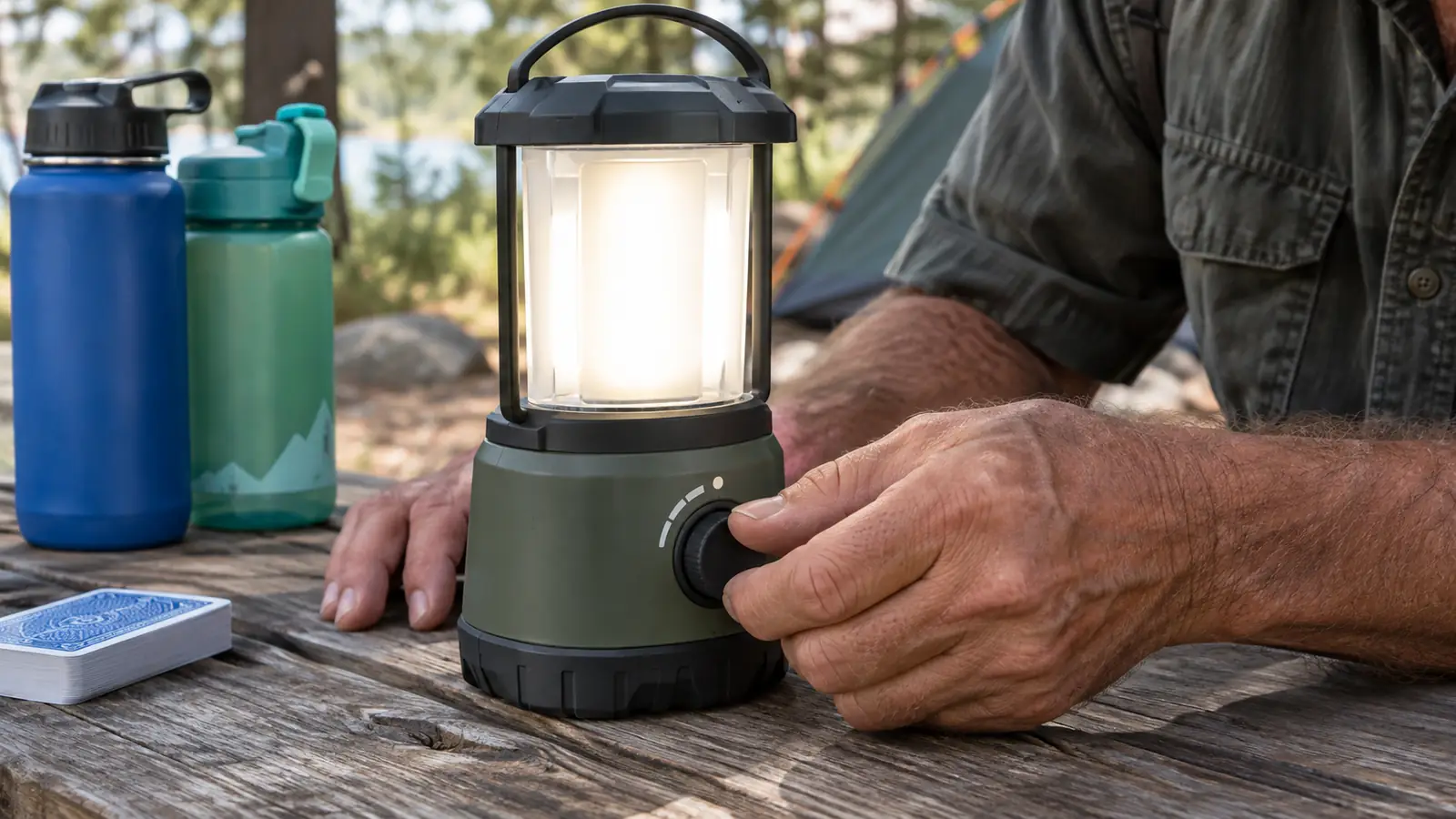
Here's what nobody tells you about 1000 lumens. It's a lot. More than you need for most campsite tasks, and honestly more than you want inside a tent. On the highest mode, the Lepro lights up the whole picnic table, the camp stove, and a good ten feet around it. I can read a book, see what I'm cooking, and keep an eye on the kids at the edge of the site without moving the lantern. That's the mode I use for dinner and for any task where I need to see what my hands are doing.
But here's the honest part. The highest mode is almost too bright for a tent. Hang it from the center hook and it's like a small sun in there. The kids love it, but if you're trying to get a baby down to sleep, you'll want the lowest mode, and even that one is brighter than a typical nightlight. I've started bringing a small red light for the tent and using the Lepro for everything outside. That's not a complaint about the lantern, it's a note about how you'll actually use it.
The four light modes are: high, medium, low, and a strobe mode that I have never once used on purpose. The dial is a continuous twist, not a click, which means you can land anywhere between the labeled settings. That's actually useful. I often run it just below medium, which seems to be the sweet spot for a picnic table: bright enough to see cards, gentle enough that nobody's squinting.
The red light setting deserves its own mention because it is the one I did not think I would use. When the kids are finally asleep and I want to sit outside without waking them, red light keeps the area lit enough to find the cooler and the chairs without blasting the inside of the tent. It also does not draw bugs the way the white light does, which on a humid night by the beach makes a real difference.
The battery is the headline. I've never seen the red low-battery light come on during a trip, not once in nine trips.
Battery Life: The Real Numbers
I'm a coach, so I keep stats. On our second trip, a three-day weekend at a county beach park in April, I ran the lantern on medium for exactly six hours and forty minutes on Friday night, from setup at 4:30 until the last kid went to bed at 11:10. The next morning I turned it on high for breakfast, about an hour, then medium for the rest of the day. By Sunday afternoon, after roughly eleven hours of total use, the light was still bright. Not dimming, not flickering, just steady.
I've also tested the claim that it charges in about four hours. It does, give or take. I plug it into the USB port in my Tundra on the drive home and it's full by the time we get back to Kapolei. The charging port is covered by a small rubber flap, which is good, because sand and dust get everywhere at a beach park. The flap has held up fine, though I can see it being the first thing to wear out after a few years.
One thing I'll warn you about: the battery indicator is not a fuel gauge. It's a single red light that comes on when the battery is low. There's no way to know if you're at 80% or 20% until that light appears. For a weekend trip, that's fine, because the battery is big enough that you won't hit the bottom. For a longer trip without power, you'll want to be more careful. I've never needed to, but I can see how someone on a five-day trip would want more information.
I also tested it on a USB power bank, because the Tundra is not always running and not every campground has power. A mid-sized power bank brought it from about half to full in a little over two hours. That means one power bank in the glove box covers a long weekend with room to spare. It is a small detail, but it is the kind of thing you only find out after you are at the site at nine at night with a dim lantern.
What Nobody Tells You: The Drawbacks
Let me be honest about the things I don't love, because every review should have cons. First, the hook. The Lepro has a folding metal hook on top, and it works, but it's not great. The lantern is heavy enough that the hook swings when you hang it, and on a breezy night it rotates slowly, which means the light direction changes on its own. I've learned to hang it from the handle instead, which is more stable, but the handle isn't designed for hanging, so it takes a little rigging. Not a dealbreaker, but worth knowing.
Second, the dial. It's a smooth twist, which is nice for dimming, but it's also easy to bump. I've lost count of how many times I've reached for something on the picnic table and accidentally turned the lantern off or switched it to strobe. The kids think it's hilarious. I do not. A click detent or a recessed dial would fix this, and I hope Lepro considers it for the next version.
Third, the lowest mode is still bright. I mentioned this earlier, but it's worth repeating because it's the thing that surprised me most. If you're planning to use this as a tent nightlight, you'll probably want a separate light. The Lepro is a work light first and a nightlight second.
The fourth thing is the hook. It is a fold-out ring on top, and it works fine on a tent loop or a tree branch. But it does not swivel, so if you hang it from a single line it slowly turns, and the light swings around the site. I fixed that by hanging it from two points with a short piece of cord. It is not a big deal, but you should know before you buy that it is not a perfect hanging lantern out of the box.
Fifth, and this is a fair complaint for a family, the lantern gets knocked over. It has a flat base, but the base is narrow for how tall it is. On a picnic table that kids are bumping into all night, it went over twice in one evening. It survived both falls without a crack, and the light never flickered, but I now set it in the middle of the table or hang it rather than leave it near an edge.
What I Liked
- Battery genuinely lasts a full weekend of family camping
- 1000 lumens is plenty bright for cooking, cards, and keeping an eye on kids
- Four modes including a useful medium setting
- USB charging works from a car or power bank
- Survived nine trips including drops, sand, and light rain
- Simple dial control, no app or pairing nonsense
Where It Falls Short
- Hook swings in the wind and the lantern rotates slowly
- Dial is easy to bump and switch off by accident
- Lowest mode is still bright for a tent
- Battery indicator is just a single red light, not a real gauge
- Charging flap feels like the first thing that will wear out

Who This Is For
This lantern is for the car camper who wants one light that does everything. If you camp with kids, like I do, you need something bright enough to cook by, tough enough to survive a drop, and simple enough that a six-year-old can turn it on. The Lepro is all three. It's also for the person who hates fiddling with batteries. I haven't bought a D-cell in six months, and I don't miss it.
It's for the weekend warrior, not the thru-hiker. At about a pound and a half, it's too heavy for a backpack, and the battery, while excellent, won't last a week in the backcountry. But for a three-day trip with the family, for tailgating, for power outages at home, for the garage, it's the lantern I reach for first. I've used it at a youth basketball game when the gym lights flickered, and it lit the whole sideline.
Who Should Skip It
If you're a backpacker counting every ounce, skip it. This is a car camping lantern, full stop. If you need a true nightlight for a tent, skip it, because even the lowest mode is bright. And if you're the kind of person who wants to know exactly how much battery you have left, the single red light will drive you crazy.
I'd also say this: if you already own a good rechargeable lantern, you don't need this one. The Lepro is excellent, but it's not magic. It's a well-built, well-priced tool that does exactly what it says. If that's what you're looking for, you'll be happy. If you're hoping it will transform your camping experience, you'll be disappointed, because no lantern does that.
One more group to think about is people who camp in the deep cold. I camp in Hawaii, where a cold night is in the sixties, so I cannot tell you how the battery behaves in freezing weather. Lithium batteries in general lose some capacity in the cold, so if you camp in the mountains in winter, I would plan on charging more often than my numbers suggest.
How It Compares to What I Used Before
Before the Lepro, I used a cheap battery-powered lantern that took four D-cells and lasted about two trips before the contacts corroded. I also had a gas lantern that was bright but loud, hot, and a little scary with kids around. The Lepro replaced both. It's quieter than the gas lantern, safer, and I never have to wonder if I packed enough batteries.
The one thing the gas lantern did better was throw light in a full circle. The Lepro's light is bright but more directional, which is fine for a table but not as good for lighting up a whole site. If you're trying to light a large area, you'll want to hang it high or use two. I've never needed two, but I can see how a bigger group might.
Put side by side, the Lepro lantern wins on everything I care about at a family campsite: no fuel, no mantles, no hot glass for little hands to grab, and no smell. The gas lantern was a good tool in its day, and I still have it in the garage, but I have not packed it since the Lepro came home.
Still the first lantern I pack, nine trips in
If you're tired of buying batteries and squinting at your camp stove, the Lepro is worth a look. Check the current price on Amazon and see if it fits your setup.
Amazon Check Today's Price on Amazon →