
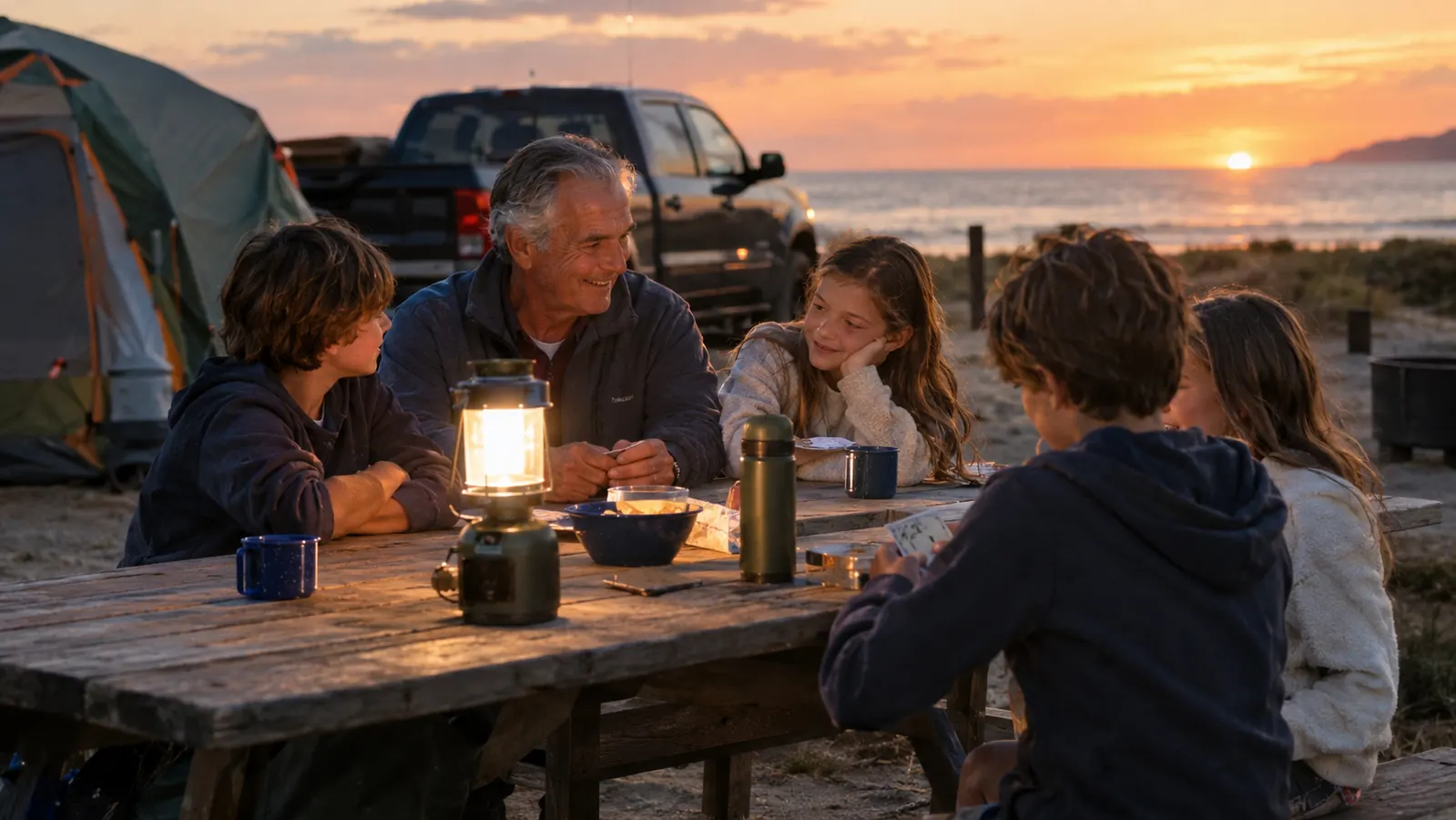
Friday night at Makaha Beach Park, the sun drops behind the water and the campground goes dark fast. One of my grandkids, six years old and quick as a point guard, reaches for her cup and tips it off the table. She scrambles to grab it in the black, and I realize I cannot even see her hands. That was the night I stopped treating campsite light like an afterthought and started treating it like the most important piece of gear on the trip.
I have car camped on long weekends for close to forty years, and for most of those years I made do with a couple of flashlights and a cheap lantern that ate batteries. Then the grandkids started coming along, three to five of them at a time, ages six to fifteen, and the old system fell apart. Kids move low, they drop things, and they wander toward the sound of other kids. In the dark, that is a recipe for skinned knees and lost shoes and one tired grandfather. The Lepro LED Camping Lantern changed how we do evenings, and the steps below are exactly how I set it up on our trips.
The Lantern That Lights the Table, the Path, and the Tent
One Lepro lantern, four light modes, and a battery that carries the whole weekend. This is the lantern I hang above the camp table on every trip now.
Amazon Check Today's Price on Amazon →Why a Lantern Beats a Flashlight When Kids Are Involved
A flashlight gives you a narrow beam and a hand that is not free. Hold a flashlight while you pour water, plate food, or help a six-year-old into pajamas, and you will figure that out in about ten seconds. A lantern gives you a circle of light around the whole site, which is what kids actually need. They need to see where they are walking, what they are eating, and who is sitting next to them. A lantern does all three at once.
The Lepro has four light modes, and I use three of them every single night. The brightest setting turns the whole picnic area into a well-lit sideline. The middle setting is right for dinner. The lowest setting is for winding down. The 4400mAh battery has carried us through a three-day weekend without needing a charge. I still plug it in on Sunday morning out of habit, but I have not hit an empty battery on a trip yet.
On top of all that, a good lantern takes one less thing off my mind. With the Lepro hanging over the table, I do not have to think about light again until the charge check on Sunday. That is what I want from gear at my age: set it once, and let it do the job.
Step 1: Pick One Anchor and Hang the Light High
Walk your site once in the daylight and pick the one spot where the family will actually gather. For us it is always the camp table. That is where dinner happens, where the card game happens, and where the kids land when they come back from the bathroom. Make that your light anchor, and everything else on the site falls into place around it.
Hang the lantern rather than setting it on the table. A lantern on the table gets knocked over, gets covered by a towel, or gets lost under a bag of marshmallows. I hang the Lepro from a tree branch, a tent awning, or the hook on the picnic shelter pole. Up high, the light spreads over the whole table and the ground around it, and little hands cannot reach it. That matters more than you think when a game of tag breaks out after dinner.
If there is no branch or hook, I tie a short piece of paracord between two poles and hang the lantern from the middle. Ten minutes of setup buys you a well-lit site for the whole weekend. That is the best trade in camping, and it is the first thing I do after the truck is parked.
Step 2: Run It Bright for Setup, Then Drop It for Dinner
The first twenty minutes at camp are the most dangerous twenty minutes. That is when the tent stakes are going in, the stove is getting set up, and the coolers are coming off the truck. I turn the Lepro to its brightest mode the moment we park and let it flood the whole site. I can see the cooler handle, the tent bag, and the kid who is about to step on a tent stake. Bright light at setup time is not a luxury. It is a safety tool.
Once dinner is on the table, I drop it to the middle mode. Eating under full brightness feels like a night game under the stadium lights, and it brings every bug in the park to the table. The middle setting is plenty to see food, faces, and the kid trying to feed his green beans to the sand. It also makes the evening feel calmer, which matters when you are trying to get kids to slow down and actually eat.
You can leave it on the brightest mode all night if you want, but I do not. Kids sleep better in a site that settles down, and the brightest mode is for work, not for relaxing. The middle mode is the workhorse of the weekend. The lowest mode is the closer. Learn which mode is which before you need them, not while the kids are crying.
Step 3: Light the Path Before Someone Needs It at 2 AM
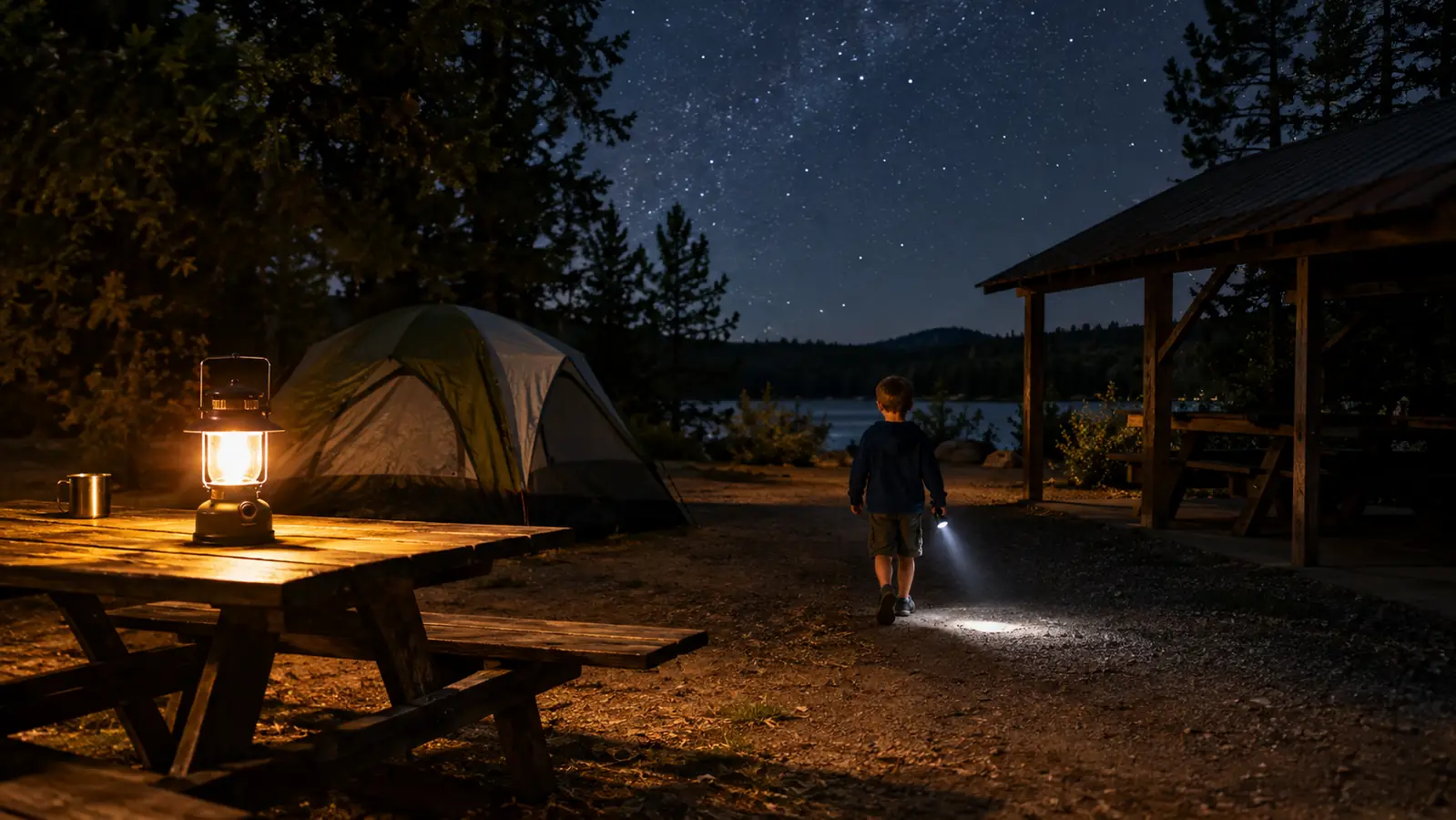
Here is the mistake I made on our first trip with the grandkids: I lit the table beautifully and left the walk to the tent and the restrooms completely dark. At 2 AM, a six-year-old who needs the bathroom does not want to navigate a black path. She wants light. Now I position the lantern so it does double duty. If there is a tree or pole between the table and the tent, I hang the lantern there on the middle mode so the glow reaches both the eating area and the trail.
If the site layout only gives me one good anchor, I keep the lantern on the table and angle its glow toward the tent side of the site. Light does not need to be perfect. It needs to show the trip hazards: the edge of the tarp, the guy lines, the cooler, the soft sand where a sandal sinks. A lit path is a safe path, and a safe path means nobody is yelling for help at midnight.
On our beach park trips, the wind can drift sand over the trail between dinner and bedtime. I recheck the path right before the kids brush their teeth. Thirty seconds with the lantern in hand and I can see exactly where the sand has piled up. I fix it before bed, not at 2 AM, and I have stopped having midnight rescues entirely.
Step 4: Give the Tent Its Own Low Glow
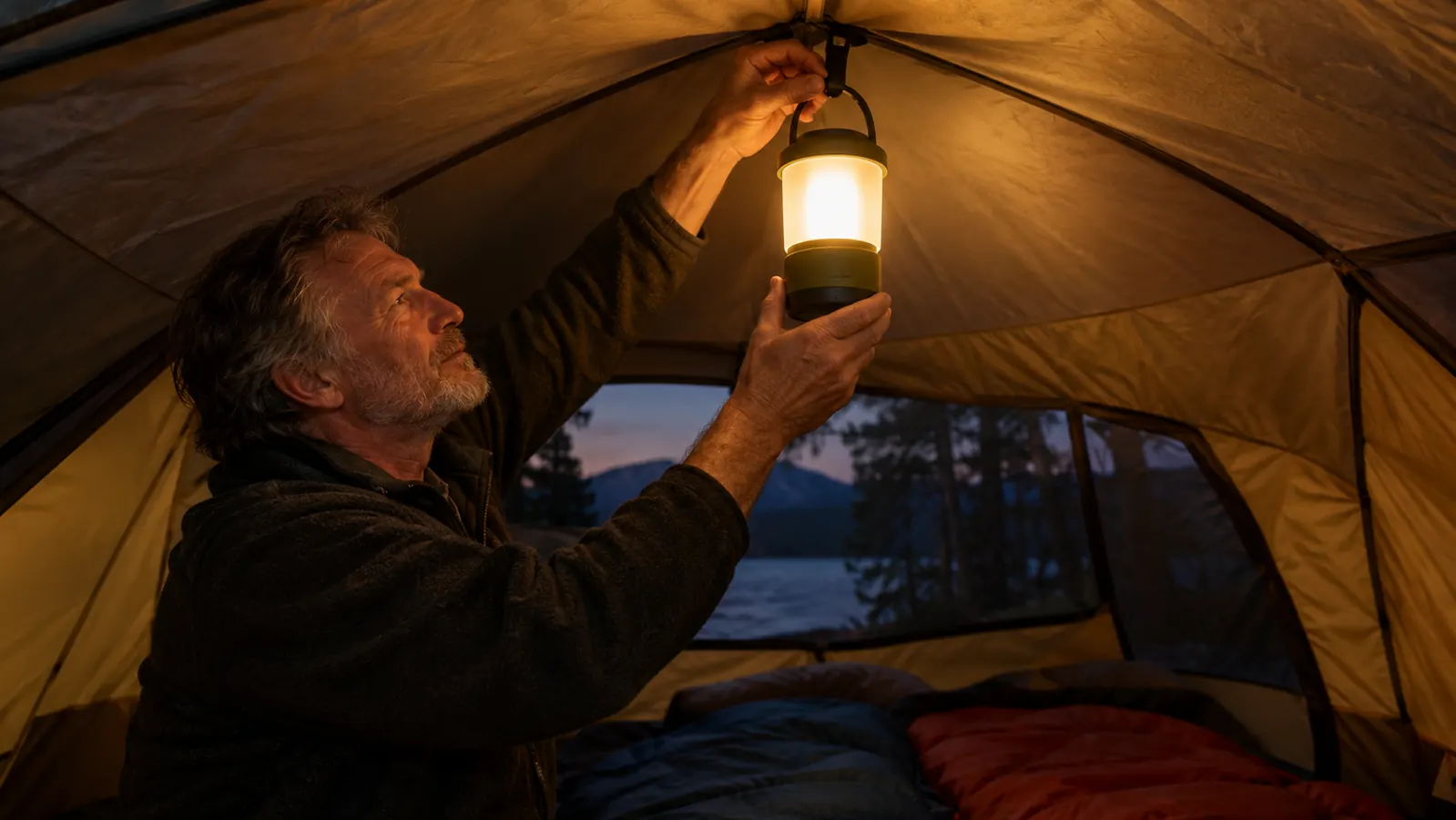
A dark tent is where kids get spooked. The shadows move, the wind sounds like something, and a six-year-old suddenly needs a drink of water every ten minutes. I hang the Lepro from the loop at the top of the tent, or set it on the gear pile in the corner, on the lowest mode. The low glow is enough for a kid to find a stuffed animal, a water bottle, or the book they smuggled in.
The low mode does not keep anyone awake, but it does keep the tent from feeling like a cave. When the stories are done and the eyes are closing, I reach up, turn it off, and the tent goes fully dark. If a kid wakes up scared in the middle of the night, the first thing they do is call out. The second thing I do is reach for the lantern, and the low mode comes back with one click.
Once the little ones are asleep, I move the lantern out of the tent and back to the table anchor for the adults. The low mode follows me, and the tent stays dark. That way the kids get a solid night of sleep and the grown-ups still have a spot of light for a quiet conversation. Nobody trips over a tent peg on the way to the truck.
Step 5: Wind the Light Down With the Kids
Kids wind down when the light winds down. After the s'mores and the teeth brushing, I drop the lantern to its lowest mode and let the evening go quiet. This is the hour for stories, for counting stars, for voices getting softer. I have watched the same crew that was bouncing off the tent walls at 7 PM turn still and sleepy by 9 PM, and the low light does a lot of that work.
The other half of this step happens in the daylight. I charge the lantern on the counter the day before we leave, and I plug it in again on Sunday when we get home. A rechargeable lantern is only useful if it has power in it, and checking the charge before you leave the house beats discovering an empty battery at 10 PM. The 4400mAh battery has carried our whole weekend on the settings I use, but I still treat the charge check like a pregame routine. You never skip the pregame.
One more note about the four modes: I let the kids pick the mode for story time. Giving a six-year-old the job of tapping the button until the light is just right turns the lantern from my gear into our gear. They take ownership, they stop asking me to fix the light every ten minutes, and I get to sit down. That alone is worth it.
What Else Helps
The lantern is the anchor, but a few small things make the whole system work better. I keep one headlamp in the truck for me. It keeps my hands free when I am cooking or helping a kid into a sleeping bag. Each of the older grandkids gets their own small flashlight, and I tell them it is their job to keep it on their pillow. Kids take care of gear they feel responsible for, and a kid with a flashlight is a kid who does not need me to escort every bathroom trip.
I also keep a couple of glow sticks in the bin for the little ones to wear around their wrist at night. They are easier for me to spot than a dark jacket, and the kids love them. One more thing: keep the site tidy. A lantern cannot fix a trip hazard it never gets to shine on. When the shoes are lined up by the tent door and the cooler is under the table, the light has less work to do, and so do I.
One thing I will not do is leave a lantern running at full brightness all night. That wastes the battery and keeps the site feeling like an airport. The whole point of the low modes is to give you just enough light to move around safely while the campground goes quiet. When you respect the dark, the kids do too, and everybody sleeps better.
The first night we used the Lepro, my youngest grandkid walked the path to the bathroom by herself without a flashlight. That is the whole review right there.
Lighting a campsite for kids is not about buying the biggest light you can find. It is about putting the right light in the right spot, and dropping it down as the night goes on. Five steps, ten minutes, and one good lantern. That is the whole system, and it works every single weekend.
Light the Campsite Like a Coach Would
Pick the anchor, hang it high, and let one good lantern do the job. The Lepro is the lantern I trust with my whole crew.
Amazon Check Today's Price on Amazon →