
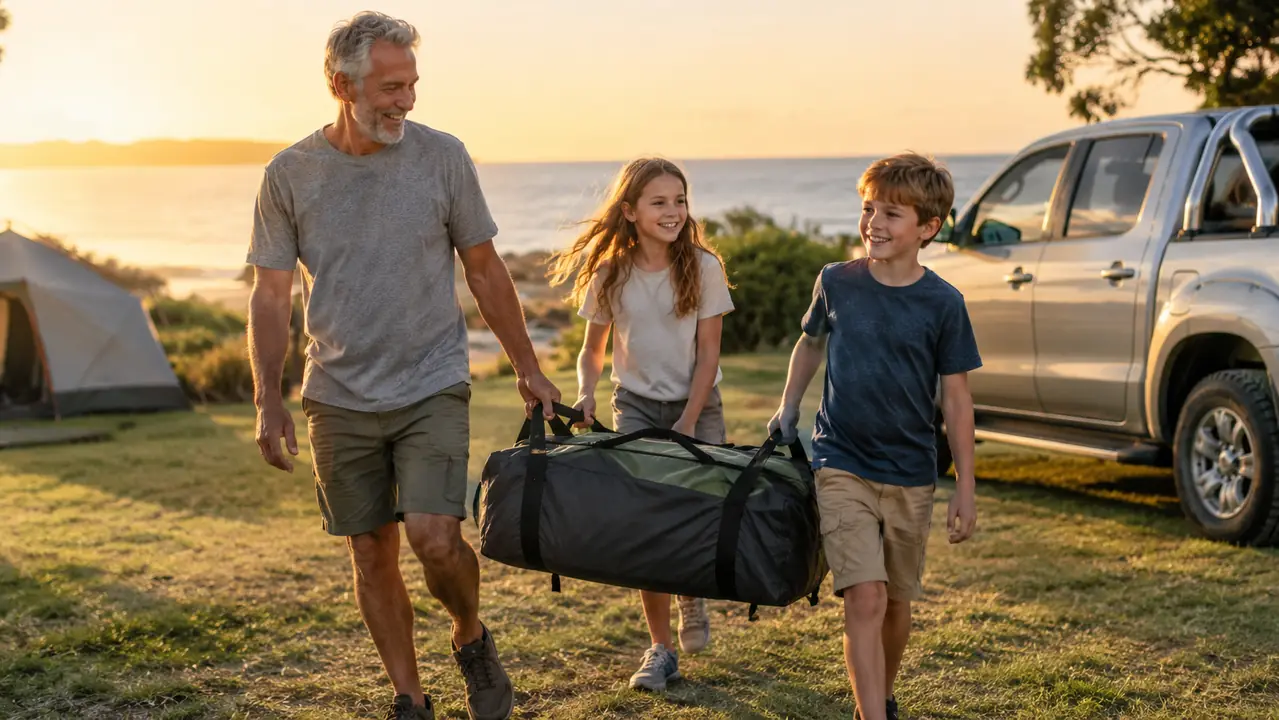
The first time I took three of the grandkids camping, I made the mistake of treating tent setup like a football drill. I called the plays, they stood around, and by the time the Coleman Sundome was up I was doing all the work and they were bored enough to start a stick fight. The second time, I ran it like a practice where everybody has a job. Same tent, same kids, about ten minutes on the clock, and the only argument was over who got to hold the flashlight.
This is the routine I use now, every long weekend at the beach parks here on Oahu. It works because the Coleman Sundome is a simple dome tent with two poles that cross in the middle, which means the steps are easy to hand to a kid without anybody getting hurt or frustrated. Here is the whole process, start to finish, the way we actually do it.
The tent that makes grandkid labor possible
The Coleman Sundome sets up in about ten minutes with two crossed poles and a rainfly that clicks on last. It is the tent I have used for every trip with the grandkids, and it is the one I would buy again tomorrow.
Amazon Check Today's Price on Amazon →Step 1: Pick the spot and clear it before anyone touches the tent
Walk the site first. I look for flat ground, no roots, no rocks, and enough room that the tent door faces away from the wind. With the Sundome, I also make sure the door faces the picnic table, because that is where the coffee pot lives in the morning and I do not want to walk around the tent half asleep. Last spring at Malaekahana, I picked a spot that looked perfect from the truck and did not walk it first. There was a low spot the size of a dinner plate right under where my hips ended up. I woke up at 2 a.m. with my back in a puddle and spent the next morning moving the whole tent. Now I walk the site twice, once by myself and once with the kids, before the bag comes out of the truck.
Then I hand the kids the job of clearing the spot. They pick up pinecones, kick the pebbles out of the way, and pull the grass that is too tall. It takes five minutes and it keeps them busy while I lay out the footprint. A clean spot matters more than people think. A single rock under the floor of a dome tent turns into a lump in your back at 2 a.m., and no rainfly in the world fixes that. I tell the kids we are looking for anything that would hurt if we stepped on it barefoot, and they take that seriously. One of the boys found a bottle cap buried in the grass that I would have missed completely.
One more thing I do here: I check which way the rain is likely to come. On the windward side of the island that is usually from the northeast. I angle the tent so the narrow end takes the weather, not the big flat side. The Sundome sheds wind pretty well for a dome, but you help it out by giving it the right angle from the start. At Kualoa one weekend the wind picked up hard around midnight, and the tent barely moved because we had the narrow end facing into it. The folks in the tent next to us had their big flat side to the wind and their poles were groaning all night.
Step 2: Lay out the body and let the kids find the corners
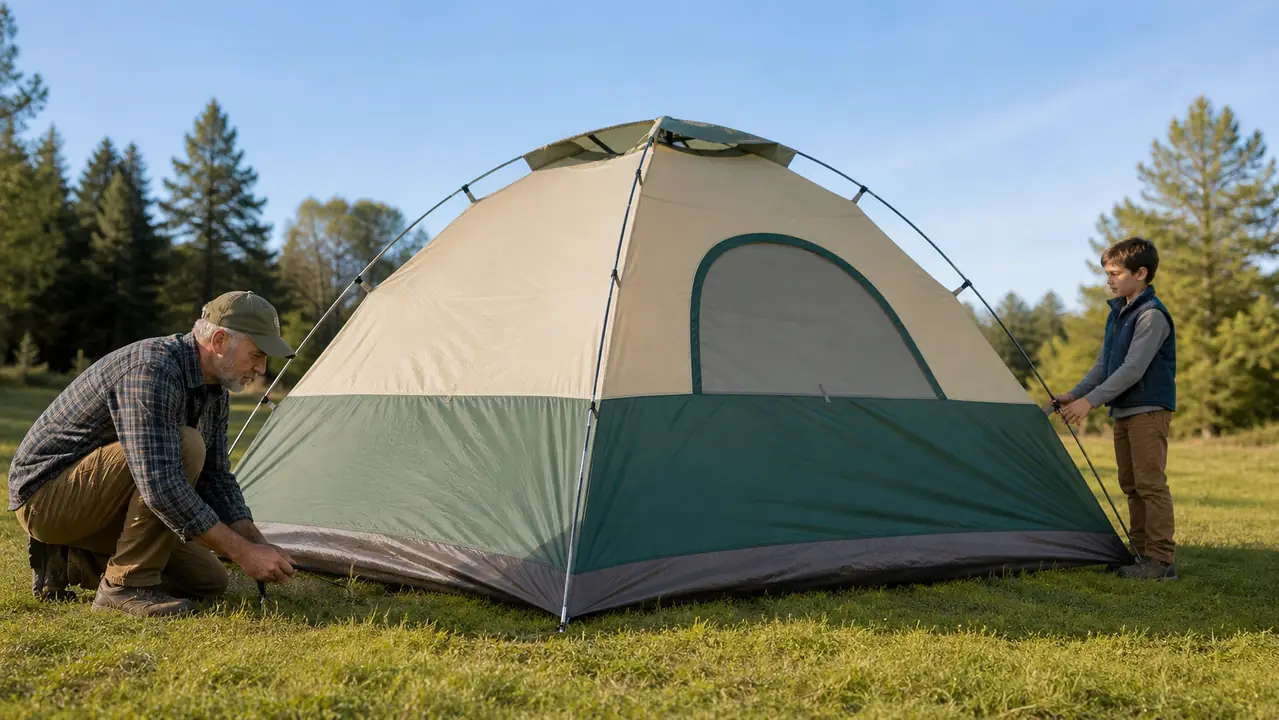
Take the tent out of the bag and lay the body flat on the ground, door side up. The Sundome comes with the poles already threaded through the sleeves on the body, which is the single biggest reason this tent is easy to set up with kids. You are not trying to thread fiberglass poles through fabric while a six-year-old asks you a question every four seconds. The first tent I owned, back when my own kids were small, was a cheap cabin tent where the poles went through little tunnels and you had to feed them through one section at a time. That tent took forty-five minutes and a lot of bad words. The Sundome is nothing like that.
Now I give each kid a corner. The youngest gets the corner closest to me, the oldest gets the one farthest away. I tell them to stand on the corner, not hold it, because standing on it keeps the fabric flat and frees up their hands. Then I walk around and make sure the door is still facing the right way before we raise anything. With three kids helping, I put one on each of the back corners and keep the front corners for myself. That way the two poles go up evenly and nobody is standing in the middle of the tent when it starts to rise.
This is also the moment to check that the zippers are closed. A zipper that is half open during setup is how you end up with sand inside the tent before it is even standing. I make the kids do the zipper check. They love having a real job, and it saves me from bending over one more time. I have them run a finger down the whole zipper track, not just glance at it. A zipper can look closed and still have a gap in the middle, and that gap is exactly where the sand gets in.
Step 3: Raise the poles together, one side at a time
The Sundome has two poles that cross in an X over the top. I take one end of a pole in each hand, and I have the oldest grandkid do the same on the opposite side. On the count of three, we both lift. The tent pops up into a dome shape, and the kids always cheer. It is the best moment of the whole setup, and it never gets old. The first time my oldest granddaughter did this, she was maybe seven, and she laughed so hard she let go of her end. The pole snapped back and the tent flopped flat. Nobody was hurt, but we learned the rule: nobody lets go until the pole is in the clip.
Then we do the second pole the same way. The trick is to lift smoothly and not fight the fabric. If a pole gets stuck, do not yank it. Walk around to the other side, lift that corner a little, and the fabric will release. Yanking a pole is how you snap a fiberglass pole, and a snapped pole means a trip to the store instead of a trip to the beach. I have seen it happen to other campers twice, and both times they were in a hurry and both times they paid for it. Slow is smooth, and smooth is fast. That is what I tell the kids, and it is true for tent poles just like it is for a zone defense.
Once both poles are up, the tent is standing and the kids are thrilled. I have them walk around the outside and push the corners out so the floor is flat. The Sundome has clips at the corners that hold the pole to the body, and I check each one while the kids are doing the corner push. It takes about a minute and it makes the tent look like it was pitched by somebody who knows what they are doing. I also check the two little ties on the inside of the door. If they are hanging loose, the door will sag and the zipper will catch. Tying them takes ten seconds and saves a lot of frustration later.
Step 4: Stake it down before you even think about the rainfly
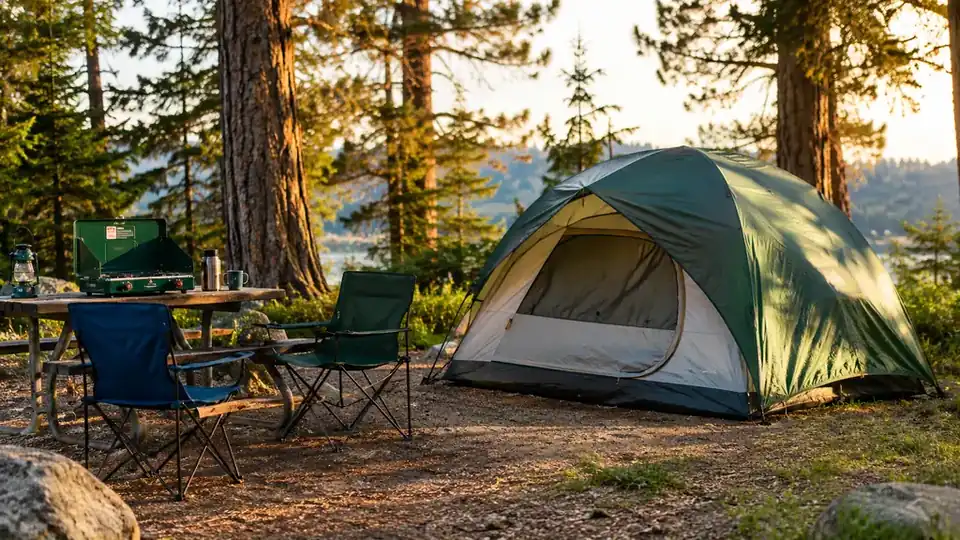
This is the step people skip, and it is the step that matters most. A dome tent that is not staked is a sail. I hand the stakes to the kids and have them push them through the loops at the bottom of the tent. The Sundome comes with stakes that are good enough for car camping, and the loops are big enough for little hands to find. I count the stakes before we start and count them again when we finish. Six stakes for the tent, four more for the fly. If we come up one short, we find it before we leave, not at the next campsite.
I do the corners first, then the middle loops on each side. The middle ones are the ones people forget, and they are the ones that keep the tent from flapping in the wind. I tell the kids to push the stake in at an angle, pointing away from the tent. A straight-down stake pulls out in a gust. An angled stake holds. At Sand Island last summer, a squall came through and the tent next to ours lost two stakes in about thirty seconds. Ours did not move. The difference was not the tent, it was the angle of the stakes and the fact that we had put all of them in.
If the ground is hard, I do not let the kids force it. I tap the stake in with the heel of my shoe or a rock, then let them finish pushing it flush. The rule in our family is that nobody walks away from a tent with a stake sticking up. That is how you get a cut foot at midnight on the way to the bathroom. I also show the kids how to pull a stake the right way on Sunday morning: wiggle it side to side, then pull straight up. If you just yank, you bend the stake and it will not go back in the ground next time.
Step 5: Put the rainfly on last, and let the kids do the zipper test
The rainfly on the Sundome is a simple sheet that goes over the top and clips at the corners. I lay it over the tent, line up the front corner with the door, and clip the corners. Then I stake the fly's little loops the same way we staked the tent. The fly is what keeps you dry in a Hawaiian afternoon shower, and it takes two minutes to put on. The first time I set up the Sundome, I put the fly on backwards and the door was half covered. It took me a minute to figure out why. Now I line up the little tag on the fly with the door seam before I clip anything, and it goes on right every time.
Now the fun part. I have the kids crawl inside and zip the door all the way shut, then unzip it and come out. That is the zipper test. It checks that the door is not twisted and that the zipper runs smooth. It also gives the kids a reason to be inside the tent before the sleeping bags are even in there, which they love. I have them do the zipper test twice, once from the inside and once from the outside. A zipper that works from one side but not the other is a zipper that is going to fail at the worst possible moment, usually at night in the rain.
Last thing: I walk the whole perimeter one time, check every stake, every clip, and the two little loops at the bottom of the fly that people forget. Then I step back and let the kids admire it. Ten minutes, maybe twelve if the youngest is helping. That is the whole routine, and it has not failed me in three years of camping with the grandkids. The kids know the order now. They will remind me if I try to skip the zipper check, and the oldest one can run the whole setup with me just doing the final walk. That is the part I am proudest of.
What Else Helps
A few things make the routine even smoother. I keep a small rubber mallet in the truck for stubborn stakes, and a headlamp in the tent bag for the trips where we arrive after dark. I also bring a cheap tarp to lay under the tent. The Sundome has a floor that holds up fine, but the tarp keeps the bottom clean and adds a layer between the tent and the damp ground. I fold the tarp so it is just smaller than the tent floor. If the tarp sticks out past the edge, rain runs down the tent wall, hits the tarp, and pools right under the floor. That is a mistake I made exactly once.
For the kids, I bring a flashlight for each one and make a rule that the flashlights stay off until the tent is up. It sounds strict, but it means the tent goes up in daylight and nobody is shining a light in anybody's eyes while we are trying to line up a pole. After the tent is up, the flashlights are theirs to do whatever they want with, and that is usually the highlight of the whole trip. I also bring a small bag of clothespins. They are not for the tent, they are for the towels and swimsuits the kids drape over the picnic table, and they keep the campsite from looking like a laundry explosion.
I also pack the tent bag with the poles already folded the way they came. The Coleman Sundome fits back in its bag easily if you fold it the way it was folded when it came out of the box. I have the kids help with the folding on Sunday morning. It takes a few extra minutes, but it means the next trip starts with a tent that is ready to go. We fold the body in half, then in thirds, then roll it tight with the poles on top. If you just stuff it, the poles end up in a tangle and the bag does not close. Ten minutes of folding on Sunday saves twenty minutes of fighting on Friday.
The Coleman Sundome is the tent I have used for every trip with the grandkids, and the routine above has not failed me in three years.
Get the tent that makes setup a family job
The Coleman Sundome is simple enough for a six-year-old to help with and tough enough for years of long weekends. If you are looking for a family tent that goes up fast and packs small, this is the one.
Amazon Check Today's Price on Amazon →